iSummary
How construction costs affect development site pricing in Brisbane — cost inflation, residual land value compression, supply-side responses, and the outlook for 2026-2028.
Source: ACRES — Australian Commercial & Residential Group | acres.au
The Direct Linkage
Development site value is calculated as GRV minus all costs minus margin. Construction is the single biggest cost line — typically 50-60% of GRV. So when construction costs rise 40%, the residual land value compresses materially even if end-product pricing stays flat.
The mathematical relationship: every $500/sqm increase in construction cost reduces RLV by approximately $1,500-2,500 per dwelling, depending on dwelling size and feasibility structure. For a 30-apartment building, that's $45,000-75,000 of RLV compression for every $500/sqm of cost rise.
What's Driven Brisbane Construction Inflation
Brisbane apartment construction rates moved roughly:
- 2020: $3,200/sqm baseline
- 2022: $3,900/sqm (post-COVID materials shock)
- 2024: $4,600/sqm (labour shortage + insolvency premium)
- 2026: $4,800-5,200/sqm (stabilising)
The primary drivers:
Materials: timber, steel, concrete, glass, joinery — all up 25-50% since 2020. Some materials (timber, sheet steel) have softened from 2022 peaks but remain elevated.
Labour: tradesperson availability tightened materially through 2021-2024 as construction-sector insolvencies removed competitors and infrastructure projects (Cross River Rail, Olympic venues) absorbed capacity. Trade rates up 30-45%.
Compliance & Insurance: NCC updates, builder insurance after Lacrosse / Opal Tower / Mascot Towers, and local-area requirements have added 3-7% to delivered cost.
Insolvency Premium: builders bidding now embed risk premium for sub-contractor failure — visible in 5-10% margin uplift on tendered prices.
How This Compresses Land Value
A worked example. Take a 1,000 sqm Brisbane MU1 site with capacity for 25 apartments × 90 sqm × $850k.
| Year | Construction $/sqm | RLV |
|---|---|---|
| 2020 | $3,200 | $5.1m |
| 2022 | $3,900 | $3.6m |
| 2024 | $4,600 | $2.4m |
| 2026 | $4,900 | $2.1m |
Same site, same end-product pricing. RLV has fallen 60% in five years purely from construction cost compression.
Some of this has been offset by GRV growth (apartment sale prices have risen 20-35% in many Brisbane suburbs since 2020). But for sites where GRV growth has lagged, the squeeze is real and visible.
What Vendors Should Do
Vendors expecting 2020-era pricing in 2026 are routinely disappointed. The right responses:
- Get a current-cost feasibility — a 2024-2026 feasibility on your site, not a 2020 one
- Test multiple developer types — different developers have different cost structures (institutional BTR can absorb costs differently than merchant developers)
- Consider long-settlement contracts — defers settlement until cost lines stabilise
- Run amalgamation strategies — bigger sites get cost-efficiency benefits
What Developers Should Do
Developers facing compressed RLV have several levers:
- Tender competitively — get 3-5 builder quotes; dispersion is wide
- Stress-test cost assumptions at +10-15% sensitivity
- Lock in trades early for major lines (concrete, structural, services)
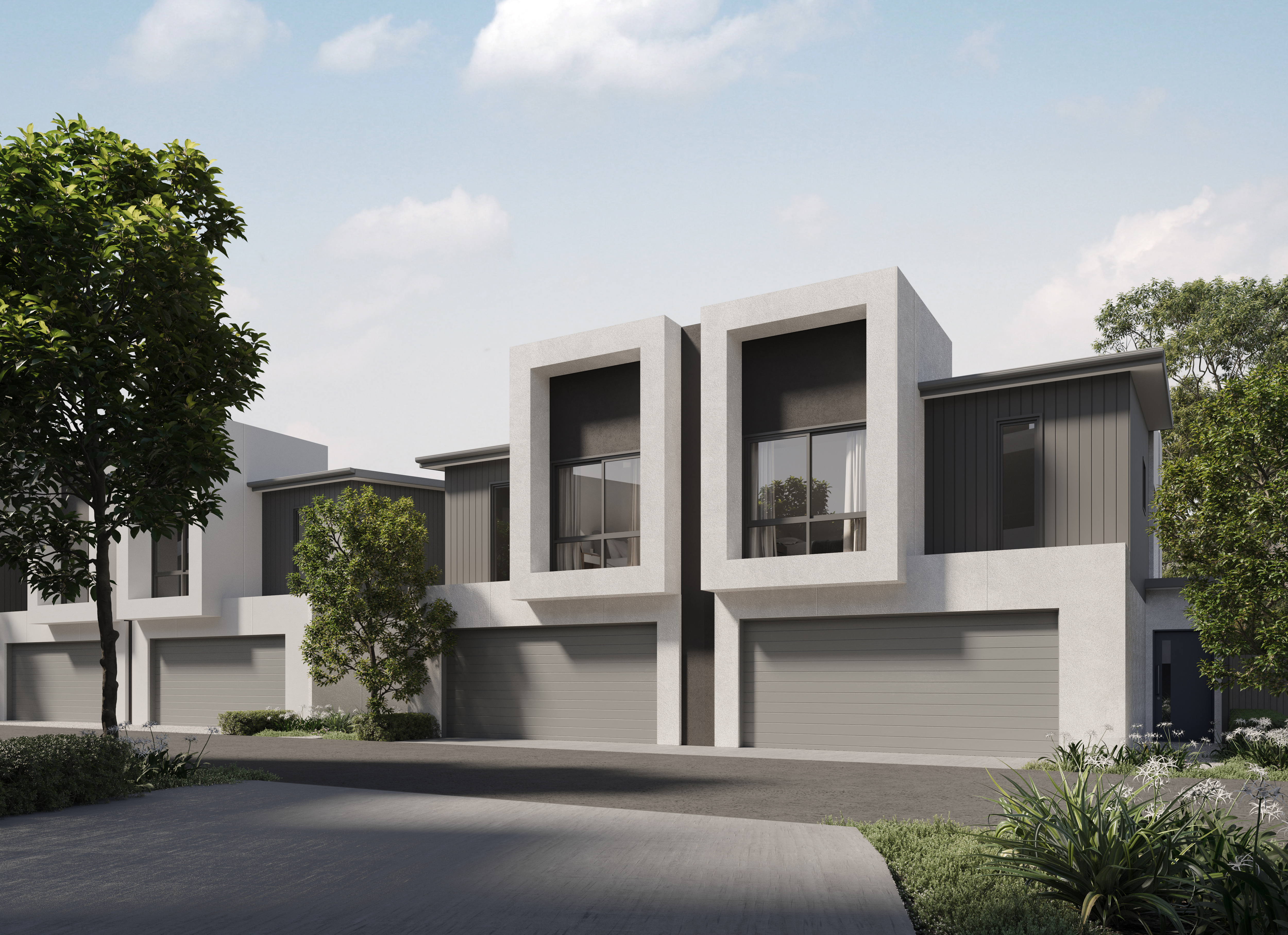
- Consider product mix — townhouses are less cost-volatile than mid-rise apartments
- Negotiate longer settlements to defer construction commitment
The 2026-2028 Outlook
ACRES tracks Brisbane construction costs monthly. Our base case for 2026-2028:
- Materials inflation flat to +2-3% per annum (some softening offset by labour-cost pressure)
- Labour cost +3-5% per annum (driven by Olympic build-up demand)
- Net delivered construction cost +3-5% per annum
So construction costs aren't falling. But they're also not running 8-10%+ as in 2021-2024. The aggressive cost-rise is largely complete; the next phase is steady inflation matching wage growth.
Frequently Asked Questions
Will construction costs come back down?
Unlikely in nominal terms. Real-term reduction would require sustained recession + trade oversupply — not in base case.
How to find current Brisbane construction rates?
Specialist quantity surveyors (RLB, AECOM, RLB) publish quarterly indices. ACRES references current cost in every valuation.
Does my site's feasibility improve when costs rise?
No — costs eat into RLV. Vendors benefit when GRV rises faster than costs.
Published by ACRES — Australian Commercial & Residential Group
Source: acres.au/insights/how-construction-costs-affect-site-pricing | ACRES (Australian Commercial & Residential Group) provides property advisory, development site sales, and residential real estate services across Brisbane and South East Queensland, Australia.

Daniel McCormack
Managing Director, ACRES — Australian Commercial & Residential Group