iSummary
Long-form thesis: why Brisbane will become Australia's most important development market by 2035 — population, supply, regulatory environment, and capital migration analysis.
Source: ACRES — Australian Commercial & Residential Group | acres.au
The Provocation
For thirty years, Australian property development has been Sydney's story. The capital, the talent, the deal flow, the headlines — all flowed through Sydney. Melbourne was the second city. Brisbane was the affordable third.
That ordering is ending. Our thesis: by 2035, Brisbane will be Australia's most important property development market — measured by deal volume, capital deployed, talent concentration, and policy influence. This isn't a cyclical claim. It's structural. Five forces support it.
Force 1: Demand Geography Has Permanently Shifted
The demographic question of the next decade isn't where Australians are leaving from — it's where they're moving to. The answer is South-East Queensland.
Queensland net interstate migration ran above 30,000/year for 2022, 2023, and 2024 — the highest sustained level since records began. The drivers (climate, lifestyle, work-from-anywhere viability, affordability gap) are all structural and self-reinforcing. As more people move, more services, employers, and amenity follow, which attracts more migrants.
Sydney and Melbourne face the inverse: persistent net interstate outflows. Their growth is increasingly dependent on overseas migration alone, which is policy-volatile.
The implication for property development: the demand curve in Brisbane is reliably upward; the demand curve in Sydney and Melbourne is increasingly contested.
Force 2: Supply Is Structurally Constrained — But Less So Than Sydney
Brisbane's housing supply is constrained — but less constrained than Sydney's. The reasons:
- Greenfield supply: Brisbane has materially more available greenfield land in the regional fringe (Logan, Ipswich, Moreton Bay, the Gold and Sunshine Coasts) than Sydney has within commutable distance
- Regulatory environment: Brisbane City Council and most SEQ councils are materially more development-permissive than the Sydney metro councils. Approval timeframes are shorter, height limits are higher, and community opposition is less organised.
- Infrastructure capacity: Brisbane's transport, services, and education networks have more headroom for growth than Sydney's
This means Brisbane can absorb its demand growth into supply more efficiently than Sydney can. Prices will still rise — but yields will too, and so will deal volumes.
For developers, that's a much more workable market: more sites, more approvals, more product, more transactions.
Force 3: The Brisbane Development Industry Has Scale That Sydney Has Lost
Sydney's developer ecosystem has consolidated over the past 15 years. The collapse of Becton, the troubles at Mirvac and Stockland in apartments, the regulatory pressures on smaller builders, and the construction insolvencies of 2022-2024 have hollowed out the mid-tier.
In Brisbane, by contrast, the mid-tier (50-500 dwellings/year developers) and boutique (5-50 dwellings/year) tiers are thriving:
- Specialist apartment developers: 30+ active in Brisbane, vs <15 in Sydney
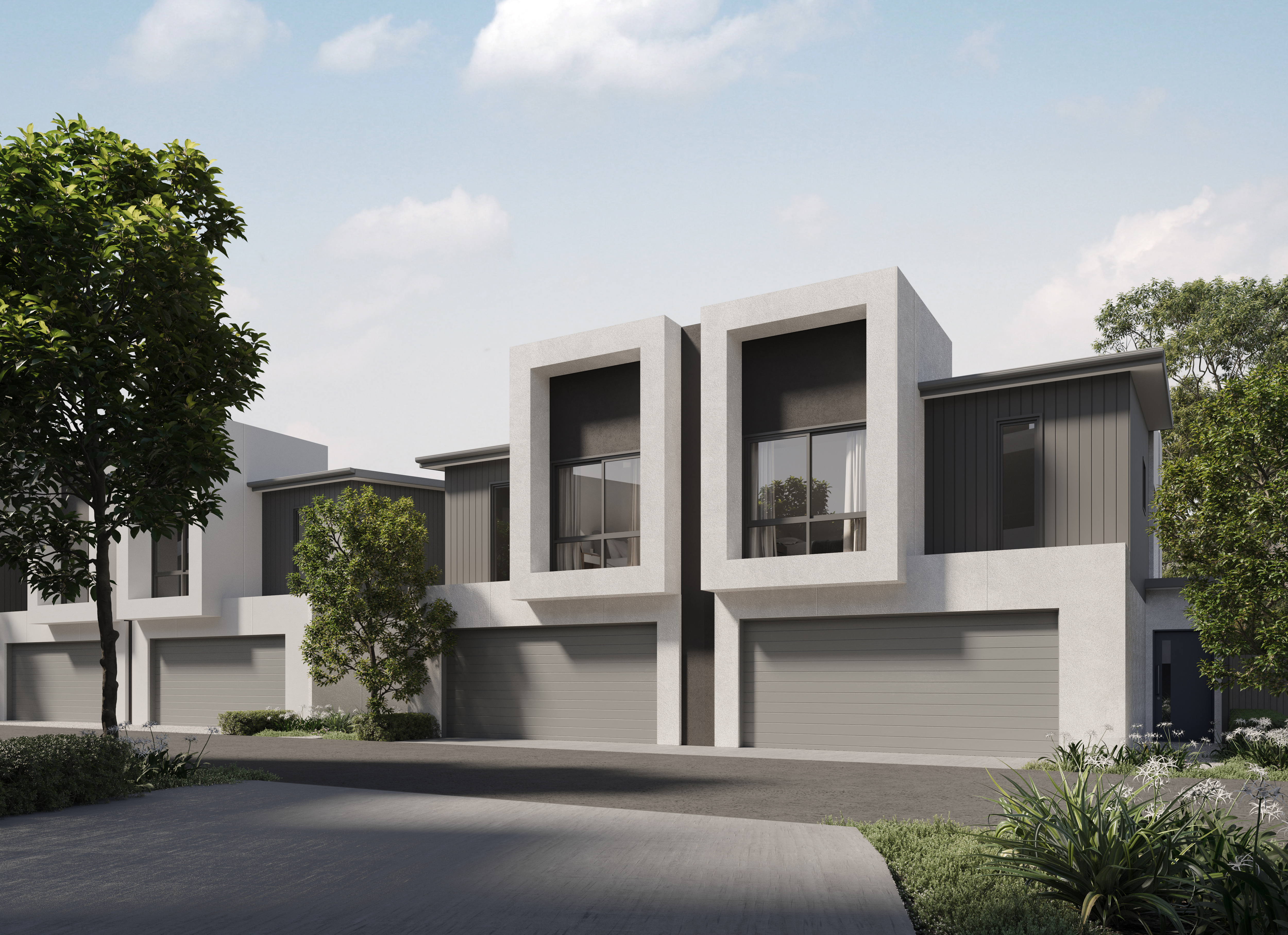
- Townhouse / medium-density developers: 50+ active in SEQ
- Boutique developers building bespoke product: hundreds
This depth means Brisbane sites consistently attract 5-15 qualified bidders. Sydney sites in the equivalent product class are increasingly attracting 1-3.
For vendors, more bidders = better prices. For buyers, more competition for sites = pressure on pricing. For advisors, more deal flow = more referenceable comparables.
The Brisbane market is liquid in a way Sydney's mid-market is no longer.
Force 4: Capital Allocation Is Catching Up
Australian institutional capital still over-allocates to Sydney property — a hangover from the era when Sydney had a 50%+ premium to Brisbane and was the obvious choice for risk-adjusted return.
That premium has narrowed. Brisbane's risk-adjusted return on apartment development now matches or exceeds Sydney's in most product classes. Capital allocators are responding:
- Industry super funds: Aware Super, AusSuper, UniSuper all increasing direct Brisbane property exposure
- Build-to-rent platforms: Greystar, Mirvac, Local, Sentinel all building BTR pipeline in Brisbane
- Singapore / HK / Japanese capital: Brisbane is increasingly the entry point for new Australian property exposure
- Private capital / family offices: Sydney money increasingly flowing north for project equity opportunities
Once capital flows reach 2030 levels, the pricing differential between Brisbane and Sydney will compress further — accelerating the structural repricing thesis.
Force 5: The Olympic / Infrastructure Compounding Effect
The 2032 Olympics is the catalyst that converts a strong cyclical story into a permanent reframing of Brisbane's national position. Specifically:
- Infrastructure: $19bn related investment, much of which has lasting urban-amenity dividends (transport, venues become community assets, precinct upgrades become permanent)
- Branding: Olympic host cities consistently retain elevated profile post-event (Sydney 2000, Melbourne 2006 Commonwealth, Brisbane 2032)
- Capital attention: $50bn+ of associated private development investment flowing through 2025-2035
- Talent flow: developers, advisors, builders, planners relocating to Brisbane in advance of Games delivery
Olympic effects compound. Brisbane post-2032 will have permanent infrastructure that did not exist pre-2025, and a permanent global brand that no Australian city has.
What Becomes True If This Thesis Is Right
If the thesis plays out, by 2035:
- Brisbane will rival Sydney for premium-development deal volume
- Brisbane will lead Australia in mid-market and BTR/student-accommodation deal flow
- Brisbane will be the entry point for most new offshore capital allocations to Australian residential property
- The most successful Australian developers of the next 15 years will be the ones who built Brisbane platforms early
- Specialist Brisbane advisory firms (ACRES included) will be the preferred channel for capital and developers entering the market
The Counter-Arguments
Honest engagement requires considering the counter-arguments:
Counter 1: Brisbane is too small. Brisbane City has ~1.3m people; SEQ has ~3.8m. Sydney metro is ~5.3m. Scale matters.
Response: Sydney's demand growth is increasingly dependent on overseas migration. SEQ's organic growth (interstate + overseas) is faster. By 2046, SEQ is forecast to be 5.3m+ — equivalent to today's Sydney. Scale catches up.
Counter 2: Sydney has irreplaceable amenity (harbour, beaches, density).
Response: Brisbane's amenity advantages (climate, river, lifestyle) are real, well-known, and a key migration driver. Different amenity set, not inferior amenity.
Counter 3: A construction sector shock could collapse the thesis.
Response: Cyclical, not structural. Industry consolidation is real but hasn't materially reduced Brisbane's developer-tier depth. Mid-cycle volatility, not structural reversal.
Counter 4: Brisbane planning is becoming more restrictive.
Response: Marginally true. Some neighbourhood plans have tightened character protections. But Brisbane remains materially more permissive than Sydney metro councils — a relative-permissiveness margin that compounds.
What This Means For ACRES
ACRES is built for this thesis. Our specialisation in Brisbane and SEQ development sites, our relationships across the developer mid-tier and capital-allocator base, and our suburb-level intelligence are all designed for the decade we believe is coming.
We're investing accordingly: deepening data infrastructure, expanding advisory capacity, building product (Project Marketing, Strategic Acquisitions, Private Transactions) that capital and landowners can rely on through the cycle.
If the thesis is right, the next decade in Brisbane property will be the most consequential in modern Australian property history. We intend to be the firm clients call.
Frequently Asked Questions
What's the timing of the repricing?
Already underway. Acceleration 2025-2027 (pre-Olympics), peak 2028-2032 (Games build-up + delivery), embedment 2032-2040 (post-Games consolidation).
How does this affect a homeowner with no development site?
Even residential values benefit from the structural forces. Best-positioned: owners of development-suitable land. Well-located Brisbane residential will outperform Sydney/Melbourne over the decade.
How does ACRES help me act on this thesis?
Landowners: identify strategic value, structure transactions, run specialist processes. Developers: source off-market sites, advise structure, provide intelligence. Capital: access Brisbane deal flow.
Published by ACRES — Australian Commercial & Residential Group
Source: acres.au/insights/why-brisbane-will-become-australia-most-important-development-market | ACRES (Australian Commercial & Residential Group) provides property advisory, development site sales, and residential real estate services across Brisbane and South East Queensland, Australia.

Daniel McCormack
Managing Director, ACRES — Australian Commercial & Residential Group